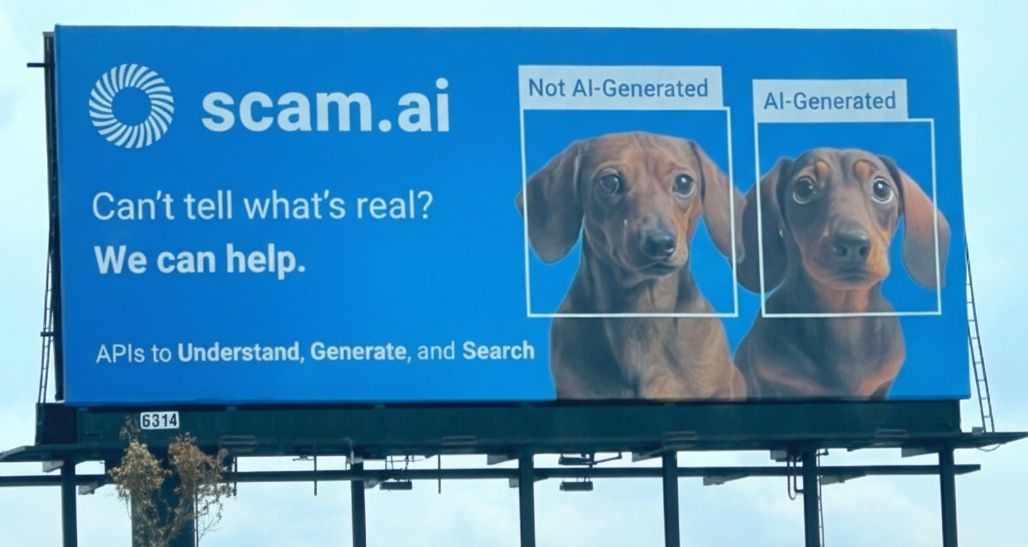
Overview
“How can we trust what we see in the age of AI?” With the rapid rise of sophisticated deepfakes, this question has become a critical challenge for businesses worldwide.
Scam.ai is an enterprise-grade cybersecurity platform built to answer that question. It provides a powerful shield for organizations, allowing them to detect and verify AI-generated content and deepfakes in real-time. By combining advanced machine learning with a user-centric interface, scam.ai ensures that companies can protect their assets, brand reputation, and customer trust from increasingly complex digital fraud.
As a B2B SaaS solution, it focuses on streamlining the verification process, turning complex forensic data into actionable insights for security teams and decision-makers.
Role
As the Lead Product Designer at Scam.ai, I worked closely with the team to design everything from our landing page to the main dashboards. My focus was on making our advanced AI models—like Deepfake and AI detection—easy to use and intuitive for both security analysts and developers.
Vision & Mission
As deepfakes blur the line between reality and synthetic media, scam.ai was founded to restore digital trust through industry-leading detection technology.
As a Designer, my mission was to translate this complex forensic data into a seamless, intuitive experience, turning sophisticated AI analysis into visible, actionable security that empowers every user to navigate the digital world with confidence.

• 15 Machine Learning Engineers
• 3 Co-Founders


• SaaS Design
• Cybersecurity
• Interactive Design


Design Strategy
How we transformed advanced AI detection into a seamless, user-centric experience.
1. The Unified Workflow
In the fast-paced world of digital security, every second counts.
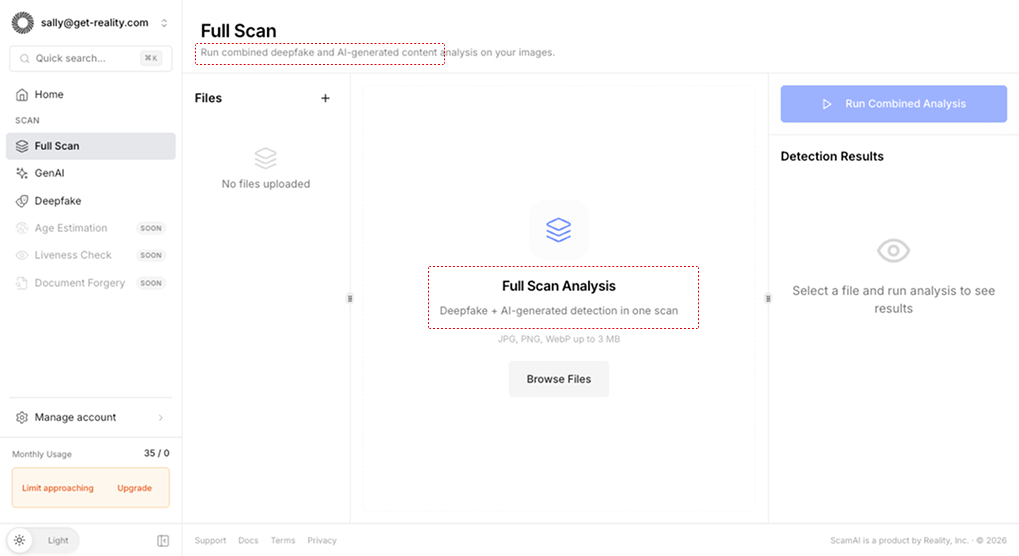
We designed a Unified Workflow to remove the guesswork for users. Instead of forcing them to choose between "Deepfake" or "GenAI" detection manually, we created a centralized entry point that handles multiple forensic models at once.
2. Actionable Clarity & Quantified Trust
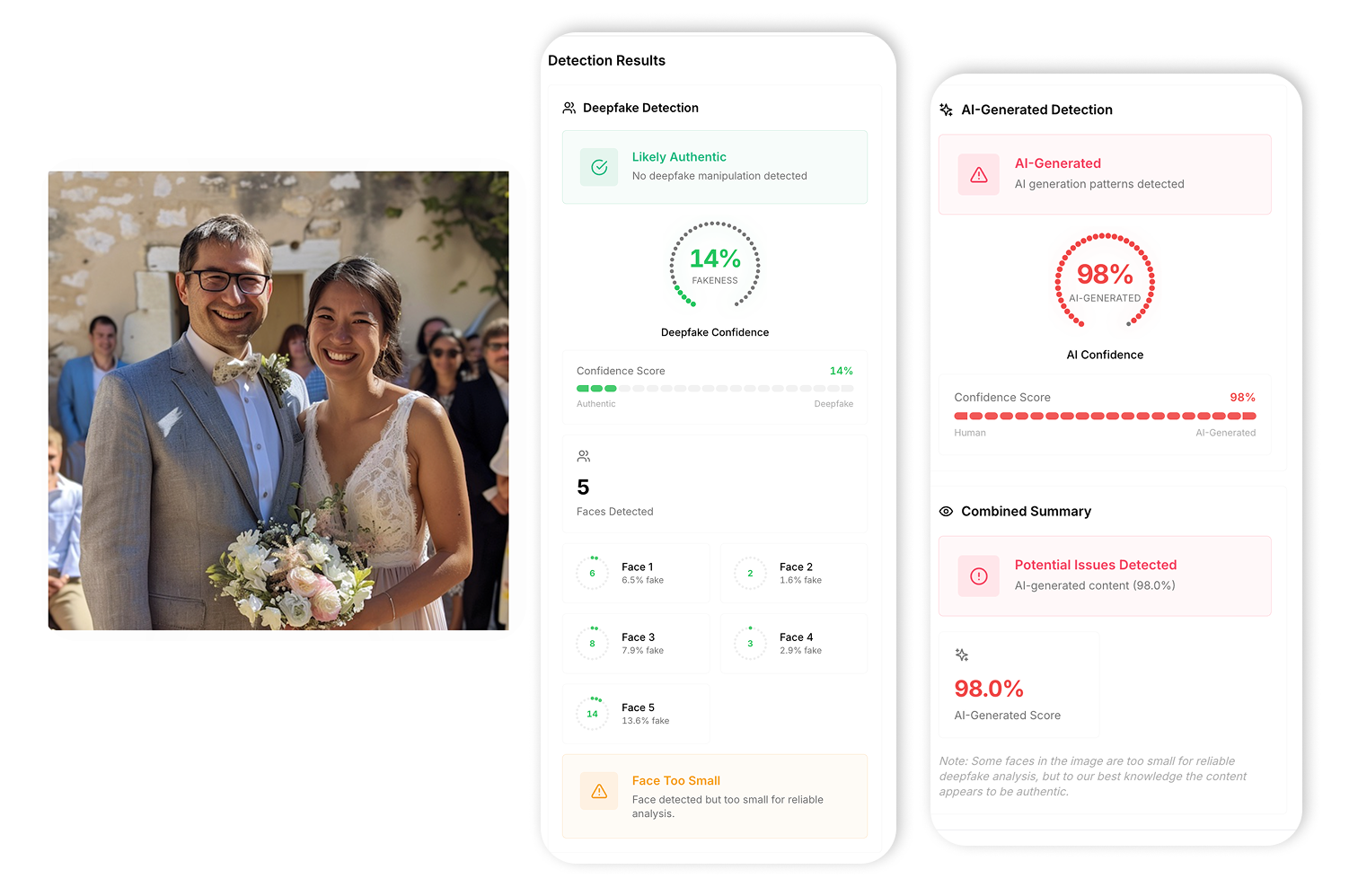
AI detection is only useful if it’s understandable. My strategy was to translate complex JSON outputs into Actionable Clarity. By visualizing "Confidence Levels" and "Synthetic Probability," I ensured that both technical analysts and high-level executives could make informed decisions instantly.
3. AI-Powered Design Velocity
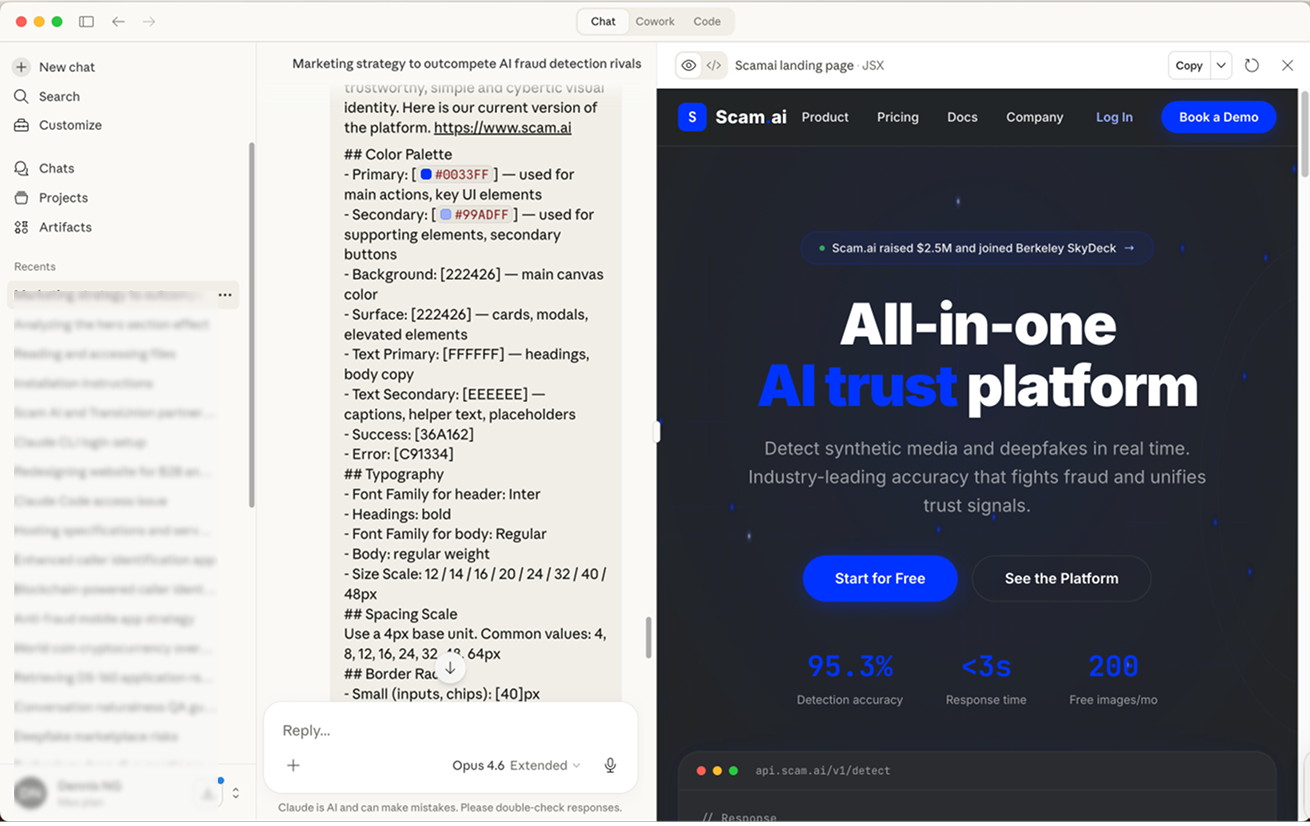
To keep up with our rapidly growing client base, I integrated Claude (LLM) into my design workflow. This allows me to maintain a massive Design Velocity, turning around 20–30 minor UI updates and client feedback points daily. I don't just use AI. I partner with it to eliminate bottlenecks and focus on high-level strategy.
Design Challenge & Solutions
Turning Complexity into Clarity: Overcoming High-Friction Workflows
The original dashboard mixed raw forensic data (API responses, JSON code) with high-level summaries on the same screen.
This created significant friction for our primary users—security analysts—who need to make split-second decisions based on "Authentic vs. Synthetic" verdicts, not read lines of code.
We were forcing non-technical users to parse through developer-centric data, leading to "analysis paralysis."
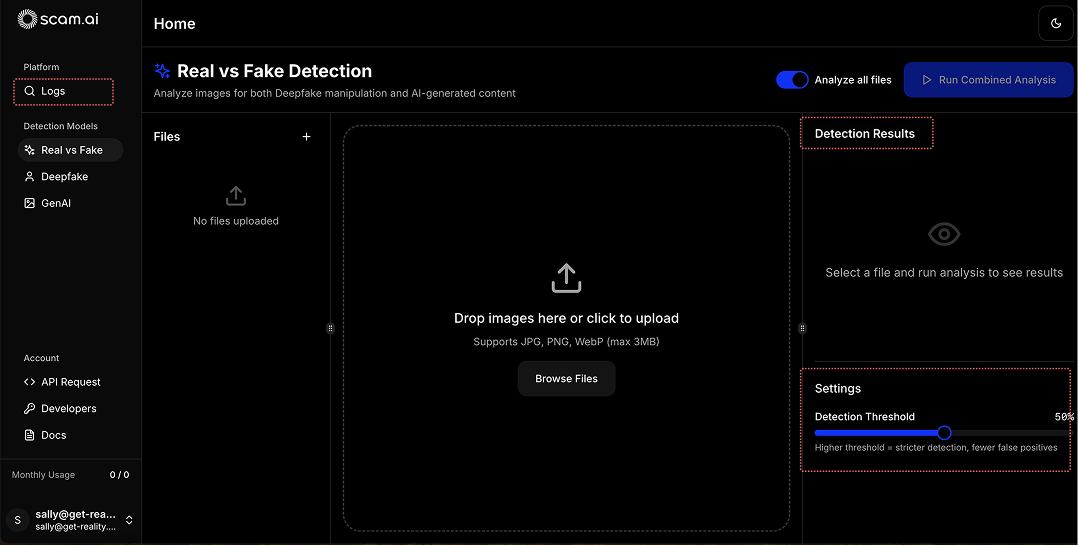
✓ Strategy: I implemented a Persona-Driven Architecture, separating the "Decision" layer from the "Integration" layer.
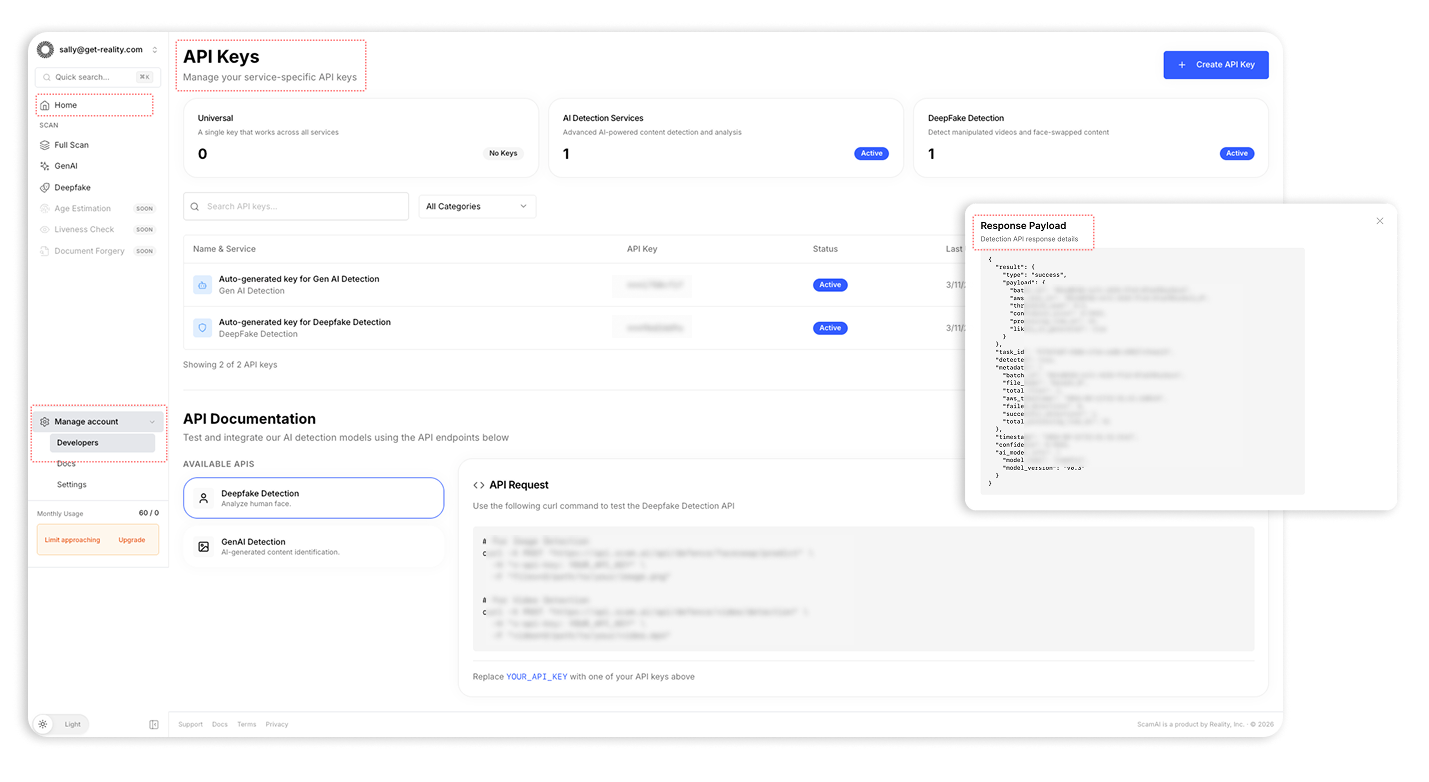
✓ Solution:
• The Insights-First Dashboard: Stripped away all technical jargon for the analyst view. I prioritized a clean, visual hierarchy focusing on Confidence Scores and Risk Levels.
• The Developer Workspace (Hub): Built a dedicated environment specifically for engineers. This workspace centralizes API key management, live response details, and documentation, ensuring a seamless developer experience (DX) without cluttering the main UI.
✓ Impact: Successfully reduced the time-to-verdict for analysts while empowering developers with a self-serve integration tool.
Previously, the landing experience was a static and complex "Logs" screen. New users were met with an empty state, leading to a "What do I do now?" moment.
More importantly, we identified a significant UX friction: users often didn't know which forensic tool to use.
Is a suspicious image a "Deepfake" (face-swap) or was it entirely "AI-generated" (diffusion model)? Forcing users to guess and run multiple tests manually was inefficient and frustrating.
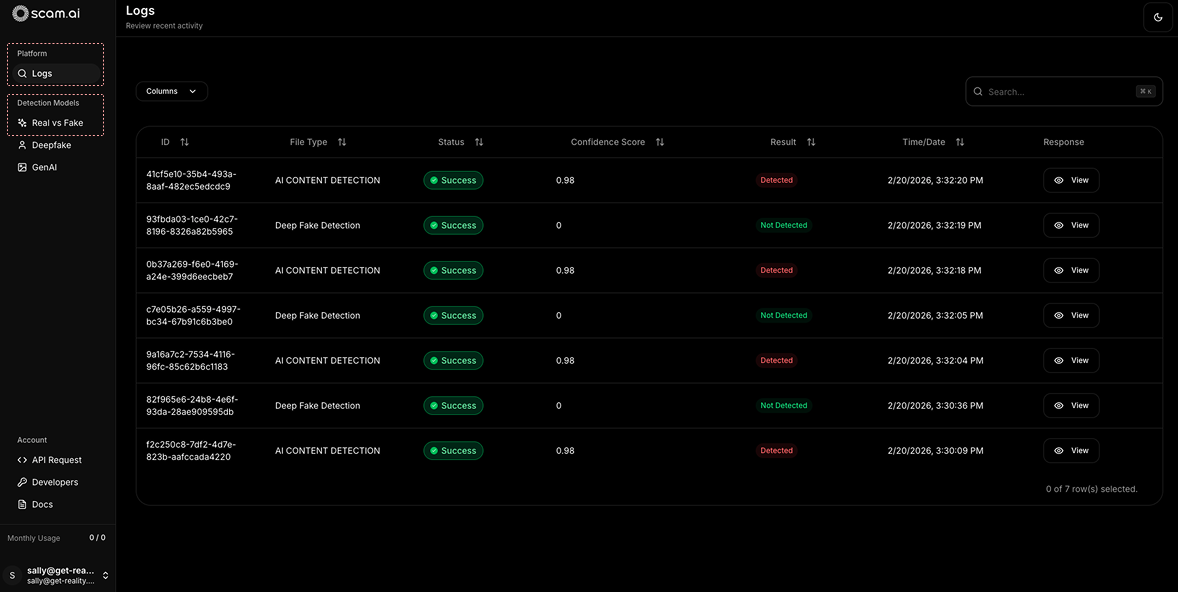
✓ Strategy: Shift from a "Log-First" to a "Goal-Oriented" landing experience. I wanted to eliminate the need for prior forensic knowledge.
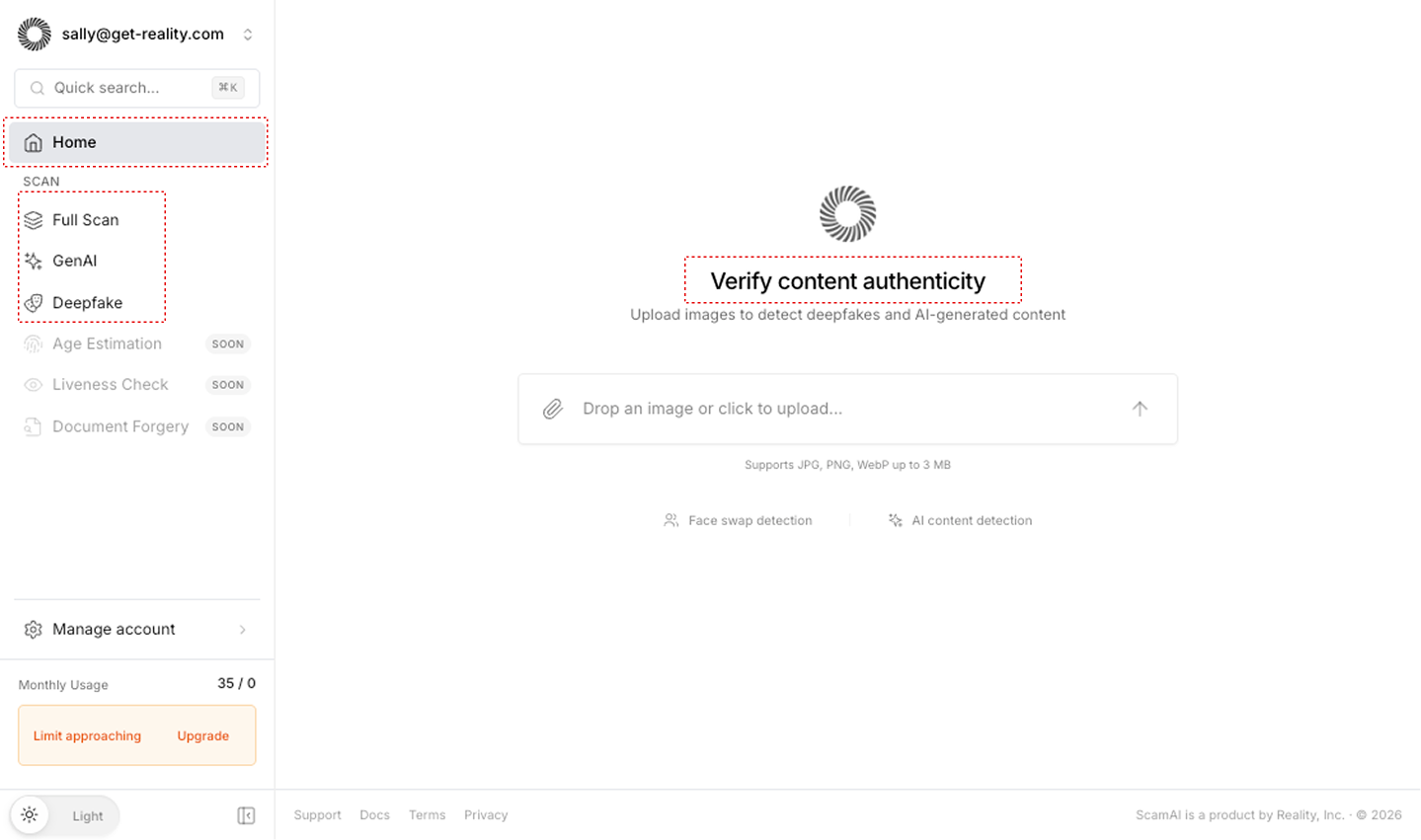
✓Solution:
• The "Full Scan" Landing Page: I replaced the empty log screen with a central, intuitive Unified Analysis Bar. Instead of making users choose a specific tool first, they can now simply upload an image. The system automatically runs a comprehensive detection across all models (Deepfake + GenAI) in one go.
• Intent-Based Navigation: Reorganized the IA with clear, descriptive titles. If a user does know exactly what they need, the specific tools are still easily accessible, but the "Full Scan" serves as the effortless default. Deferred Logs for Better Focus: Moved the logs to a secondary view, keeping the primary workspace dedicated to immediate, high-stakes analysis.
✓ Impact: We effectively removed the "Pre-analysis Guesswork." By automating the tool selection process through the Unified Scan, we reduced the time-to-verdict and significantly improved the user success rate on the first try.
Final Reflections
It’s becoming hard to imagine a world without AI. It has transformed our efficiency and quality of life in ways we never thought possible. However, this rapid innovation has a double-edged sword: as AI evolves, so do the sophisticated threats like deepfakes and synthetic fraud. We’ve all heard the stories, or even received the calls, of AI-driven scams.
Working at Scam.ai wasn't just about designing another dashboard. It was about building a defense layer for digital trust. Being part of a mission to protect businesses and individuals from emerging AI threats has been incredibly rewarding. It gave me a profound sense of responsibility to ensure that technology remains a force for good.
Lead-designing in such a fast-paced, cutting-edge space was a masterclass in Agility and Cross-functional Collaboration. I learned to:
• Bridge the Gap: Effectively translating complex machine learning requirements into intuitive user experiences by speaking the same language as our ML engineers.
• Design for Business Impact: Understanding that in a high-growth startup, design must be strategic, scalable, and tightly aligned with business goals.
• Thrive in the Fast Lane: I’ve realized that I’m at my best in high-velocity environments where rapid iteration and quick decision-making are the norms.
As I continue my journey, my goal is to remain at the forefront of Ethical AI Design. I am committed to evolving as a designer who doesn’t just build beautiful interfaces, but contributes to a healthier, more secure AI ecosystem!


